
GEOTHERMAL
Iowa ground sits near 50 degrees year-round regardless of what the air above it is doing. A ground source heat pump moves heat to and from that reservoir instead of making it — which is why it is the cheapest system to run in this climate.
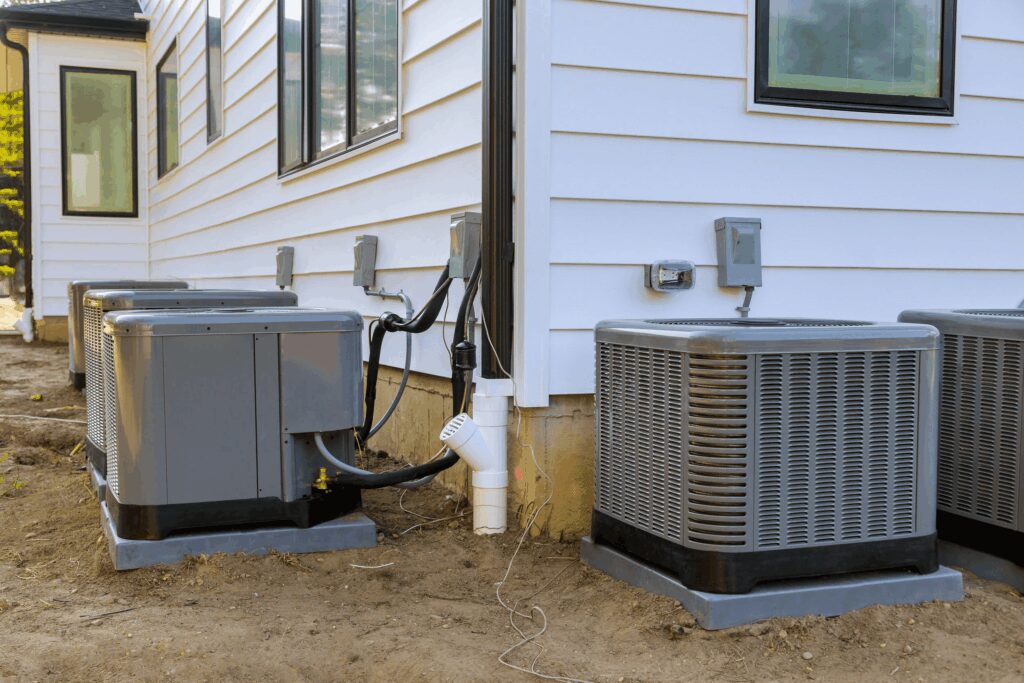
A few feet below the surface, the ground in central Iowa stays close to 50 degrees all year. A sealed loop of pipe buried in that ground circulates fluid, and a heat pump indoors extracts heat from the loop in winter and rejects heat into it in summer. There is no combustion, no flue, no gas line and no outdoor condensing unit sitting in the weather.
Because it is moving heat rather than generating it, a geothermal system delivers three to five units of heat energy for every unit of electricity it consumes. No gas furnace can do that, because a furnace is capped at the energy content of the fuel it burns.
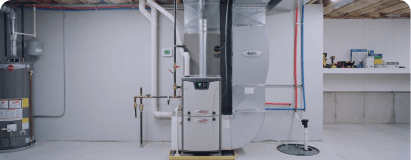
Horizontal loops are trenched several feet down across an area of open ground. They are the cheapest option when land is available, which makes them the default on acreages and rural properties around Story County.
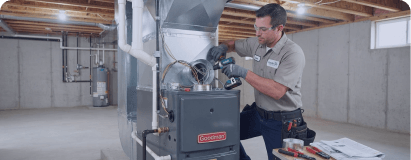
Vertical loops are drilled as boreholes, typically a few hundred feet deep. They cost more per foot but need very little surface area, so they are the answer on a normal city lot in Ames or a commercial site with limited ground.
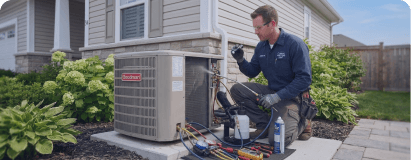
Pond loops are an option where a property has a suitable body of water, and are often the least expensive of the three when one is available.
A residential geothermal installation in this area generally runs $20,000 to $35,000 depending on the loop type, the size of the load and how much of the existing ductwork can be reused. That is a lot more than a furnace and air conditioner, and it is the honest starting point of the conversation.
What you get for it is a system with operating costs well below anything that burns fuel, no outdoor unit to replace every fifteen years, indoor equipment that commonly runs 20 to 25 years, and a buried loop field that will outlast several generations of heat pump. On a new build or an acreage where you are paying for a system anyway, the incremental cost is much smaller than the headline number suggests.
The federal 25D residential clean energy credit that covered 30 percent of geothermal cost ended for installations after 31 December 2025. Any pricing you find online still quoting it is out of date. We will tell you what incentives genuinely exist right now, including current Ames Electric Services and Alliant Energy programmes, verified with the utility before it goes in your quote.
Plenty of ground source systems around Story County were installed years ago and need attention now —heat pump replacement onto an existing loop, loop pressure and flow problems, desuperheater issues, flushing and purging, and control faults. We work on existing geothermal whether or not we installed it, which matters because the number of contractors in central Iowa who genuinely understand these systems is small.
Much cheaper to run, much higher to install, and no combustion or carbon monoxide risk anywhere in the house.
Better efficiency in deep cold because it draws from stable ground rather than sub-zero air, and no outdoor unit exposed to the weather.
The operating savings are dramatic, and these are the properties where geothermal pays back fastest.
Have Questions?
For a typical Ames home, a straight replacement of a mid-efficiency gas furnace usually lands between $4,500 and $7,000 installed. A 96%+ high-efficiency furnace with new venting generally runs $6,500 to $10,000, and a matched furnace-and-AC changeout is commonly $10,000 to $16,000. The spread comes from things we can only see on site: the size of the equipment your home actually needs, whether the existing venting and gas line can be reused, whether the ductwork is undersized, and how much sheet metal transition work the new cabinet requires. We give you the number in writing before we start.
It depends almost entirely on what you are replacing. Against propane or electric resistance heat, payback is often in the eight to twelve year range. Against an efficient natural gas furnace with cheap gas, it is considerably longer and the case rests more on comfort, low maintenance and equipment longevity than on pure payback. We will run the numbers against your actual utility bills rather than a generic example.
A horizontal loop typically needs a quarter to half an acre of accessible open ground, which is why it suits acreages. If you do not have that, vertical boreholes need only a small footprint — a few drilling locations on a standard city lot is usually workable. We assess the site before quoting, including where utilities, septic and drainage run.
Horizontal trenching disturbs the area it crosses and the ground needs to settle and reseed, so it is best done before landscaping or on a property where that is acceptable. Vertical drilling is far less disruptive— a few boreholes and the equipment access to reach them. Either way we walk the site with you and mark exactly what will be affected before any equipment arrives.
The buried loop is high-density polyethylene with heat-fused joints and is generally rated for 50 years or more — longer than the building it serves, in many cases. The indoor heat pump typically runs 20 to 25 years, notably longer than an outdoor condensing unit, because it lives in a conditioned space instead of sitting in Iowa weather.
The federal 25D residential clean energy credit, which covered 30 percent of geothermal installation cost, was terminated for systems installed after 31 December 2025. A great deal of contractor material online still advertises it. Utility-level incentives may still apply depending on whether you are served by Ames Electric Services or Alliant Energy, and we confirm current amounts with the utility before including them in a quote.
Yes, and in summer it is particularly effective because it rejects heat into ground that is much cooler than the outdoor air an ordinary condenser has to fight. It also dehumidifies well, and many systems include a desuperheater that uses waste heat from the cooling cycle to preheat domestic hot water — free hot water all summer.
Yes. We regularly take on existing ground source systems in Story County, including replacing an aging heat pump onto a loop field that is still perfectly good. If you have a system and the original installer is no longer around, call us.
Don’t wait for your comfort to freeze over. Get a professional, NATE-certified Converse technician dispatched to your home or business today.