
EXPERT TIPS
Things worth knowing before you call anyone — including us. Most of these come straight from questions our technicians answer in driveways across Ames every week.
HVAC problems in Iowa are seasonal and predictable, which means most of them are avoidable. Here is what to do and when
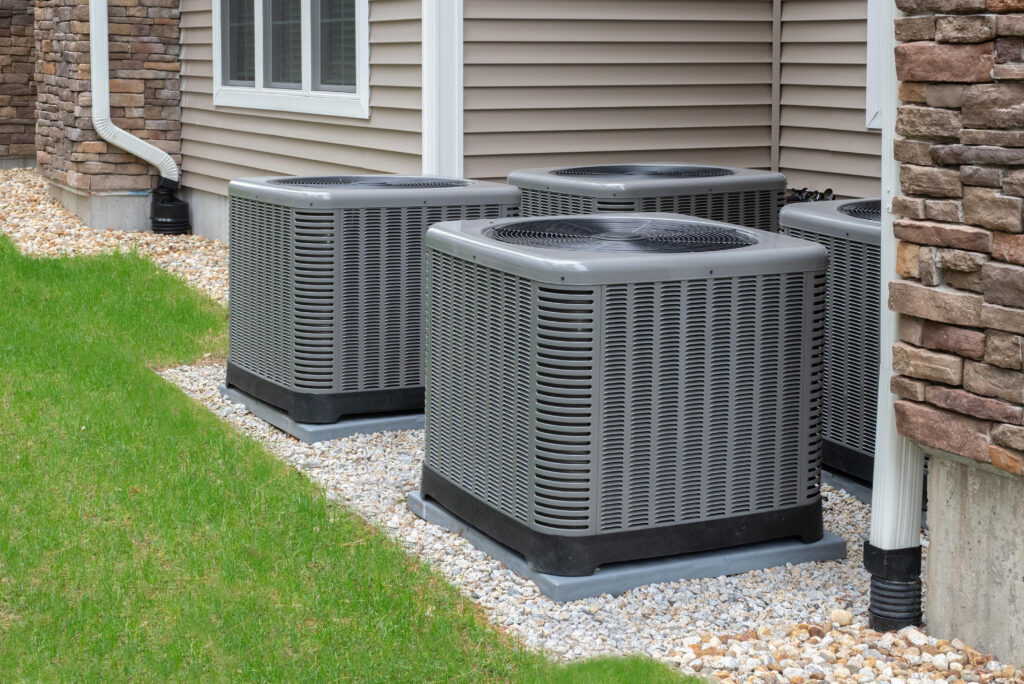
Book the AC tune-up in April or May, before the first ninety-degree week fills every schedule in town. Hose the winter debris off the outdoor coil, cut back anything growing within two feet of it, and change the filter.
Keep the condenser clear of grass clippings and cottonwood. Check the filter monthly during heavy run time. If the house is cool but clammy, that is a dehumidification problem worth a call, not a thermostat problem.
Book the furnace tune-up in September or October. Test the system on a mild day rather than discovering a fault at eleven at night in December. Replace carbon monoxide detector batteries while you are at it.
Keep the high-efficiency furnace’s intake and exhaust pipes on the outside wall clear of snow and ice. Keep supply registers unblocked by furniture. Watch humidity so windows are not streaming with condensation.
If none of that brings it back, stop there. Running a system that is frozen or low on refrigerant is how a repair becomes a compressor replacement.
The cheapest energy savings in any Iowa house come from setback and airflow, not equipment. Set the thermostat back seven to ten degrees for the eight hours you are asleep or out, and do it every day — that alone is worth roughly ten percent a year on heating and cooling. If you have a heat pump, use a thermostat with intelligent recovery so it does not call auxiliary electric heat to catch up.
Then fix airflow. A filter changed on schedule, every supply register open, furniture off the returns, and two feet of clear space around the outdoor unit. A dirty condenser coil alone can cost fifteen to twenty percent of your cooling capacity, and a clogged filter is behind a large share of the summer service calls we run.
After that it becomes an envelope question rather than an equipment question: attic insulation, air sealing at the rim joist, and weatherstripping generally return more per dollar than upgrading from a good furnace to a slightly better one.
Multiply the cost of the repair by the age of the equipment in years. If the answer clears roughly $5,000, put the money toward replacement instead. A $400 repair on a nine-year-old furnace is worth doing. The same repair on a nineteen-year-old furnace usually is not.
Three situations override the arithmetic entirely. A cracked heat exchanger is a carbon monoxide risk and cannot be safely repaired. An air conditioner still running R-22 is not economically repairable, because the refrigerant is no longer produced. And any system where the manufacturer no longer makes the parts is on borrowed time regardless of how well it is running today.
This is the most common complaint we hear in two-story Ames homes, and it is almost always a return air problem rather than a supply problem. Warm air stacks upward, and most houses here were built with returns only on the main floor, so the second storey has no easy path back to the furnace. The fixes, cheapest first: open every upstairs supply and partially damper the main floor, add a second-floor return, or put a ductless head in the worst room.
Change a one-inch filter every one to three months — monthly if you have pets, run the fan continuously or live on a gravel road. Four- and five-inch media filters go six to twelve months. Resist the urge to buy the highest MERV rating on the shelf. A dense one-inch filter in a system not designed for it starves airflow, freezes the AC coil and shortens the blower’s life. If you want serious filtration, the right move is more filter area — a four- or five-inch media cabinet — not a more restrictive one-inch filter.

Inside Ames city limits you are served by the city’s own municipal utility, Ames Electric Services, which runs the Smart Energy rebate programme on qualifying high-efficiency heat pumps, central air and geothermal. Most surrounding Story County towns are on Alliant Energy with a different programme.
Worth knowing before you accept: an Ames Electric central air rebate normally comes with agreement to a load-control switch on the outdoor unit, letting the utility briefly cycle it during peak demand.
The federal 25C and 25D energy tax credits ended for equipment installed after 31 December 2025. If a contractor’s website still promises a 30 percent federal credit, the page has not been updated. Always verify current rebate amounts with the utility itself.
A carbon monoxide alarm sounding · A burning or electrical smell · Gas odour anywhere near the furnace · Water pooling around the equipment · A breaker that trips repeatedly · Ice that returns after thawing · Any grinding or metal-on-metal noise
Have Questions?
Most people land around 68 to 70 degrees while awake and 60 to 63 overnight. The exact number matters less than being consistent about the setback. In a deep cold snap, keep the overnight setback modest if you have plumbing in exterior walls — a frozen pipe costs more than a week of heating.
No, that is a persistent myth. A house loses heat in proportion to the difference between inside and outside temperature, so a cooler house loses heat more slowly. The energy used to reheat is less than the energy saved while it was cool. The one real exception is a heat pump without intelligent recovery, where a big setback can trigger expensive auxiliary electric heat.
You generally cannot tell by looking, which is exactly why it matters. Warning signs include a carbon monoxide alarm, soot around the furnace, a flame that flutters or changes colour when the blower starts, an unusual smell during operation, and headaches or nausea that clear up when you leave the house. Combustion analysis during an annual tune-up is the reliable way to catch it. If the alarm sounds, leave the house and call 911 from outside.
Usually humidity. Dry air pulls moisture off your skin and makes a room feel several degrees colder than the thermostat says. In January an Ames house can easily sit at fifteen percent relative humidity. Bringing it into the 30 to 40 percent range with a whole-home humidifier often lets people drop the thermostat two degrees and feel warmer. Draughts from windows and uninsulated exterior walls contribute too.
In moderate weather, ten to fifteen minutes per cycle is typical. In a deep freeze a correctly sized furnace may run almost continuously, which is normal and not a fault. Cycles of three to five minutes indicate short-cycling — usually restricted airflow, a dirty flame sensor, or equipment oversized for the house.
No. Outdoor units are built for Iowa weather, and a full wrap traps moisture and gives rodents a warm place to nest in the wiring. If you want to do something, put a plywood sheet or a purpose-made top cover over the fan to keep falling ice out, and leave the sides fully open.
Don’t wait for your comfort to freeze over. Get a professional, NATE-certified Converse technician dispatched to your home or business today.