
HEATING
Gas furnaces, boilers, heat pumps, dual fuel, ductless and geothermal. When it is eight degrees and the house is dropping you need a technician tonight; when the system is twenty years old you need a quote you can trust against every other bid in town.
Central Iowa asks a lot of a furnace. A system here runs from October to April and cycles hard through every cold snap, so failures cluster in the first two weeks of real winter — which is exactly when every HVAC phone in Ames rings at once.
Most of what we fix is predictable: hot surface ignitors, flame sensors that have carboned over, pressure switches tripping on a blocked intake, inducer motors, gas valves, control boards and blower capacitors. A technician arrives, finds the fault, tells you the price, and fixes it. If the repair does not make financial sense we say so rather than quietly performing it.
Get everyone out of the house, then call 911 or the fire department from outside. Do not restart the furnace. Once the house is cleared we will test the heat exchanger and combustion before anything gets turned back on.
A replacement is a fifteen-to-twenty year decision, and it deserves more than a tonnage number copied off the old nameplate. We start with a load calculation, look at what your ductwork can actually move, check whether the existing venting and gas line support a high-efficiency cabinet, and then price the options side by side.
The most useful thing we can give you is a comparison you can take to other contractors. Same equipment, same scope, written out. Customers who shop us against four or five other Ames companies are our favourite kind of customer, because we usually come out ahead and they buy with confidence.
Nobody in this market publishes pricing, which makes furnace shopping needlessly stressful. Here is the honest range. Your actual number depends on sizing, venting, ductwork and electrical, and we confirm it in writing on site.
$4,500–$7,000 — Reuses existing chimney venting. Good fit for homes where a highefficiency vent run is impractical.
$6,500–$10,000 — Condensing furnace, new PVC venting and condensate drain. Lower gas bills, rebate-eligible.
$10,000–$16,000 — Matched system. Cheaper than two separate visits and the coil pairing is correct by design.
Cold-climate heat pumps have changed a lot, and the old advice that they do not work in Iowa is out of date. Current variable-speed models hold useful capacity well below zero. In practice most Ames homes are best served by a dual-fuel setup: the heat pump handles everything down to a switchover point in the teens, and the gas furnace takes over below that. You get cheap shoulder-season heating and a gas backup for the worst nights.
This is also the configuration that qualifies for utility rebates, and one of the few upgrades where the payback math actually works on paper. We install variable-speed heat pumps into older Ames homes regularly, including houses with finished basements where the duct routing is tight.
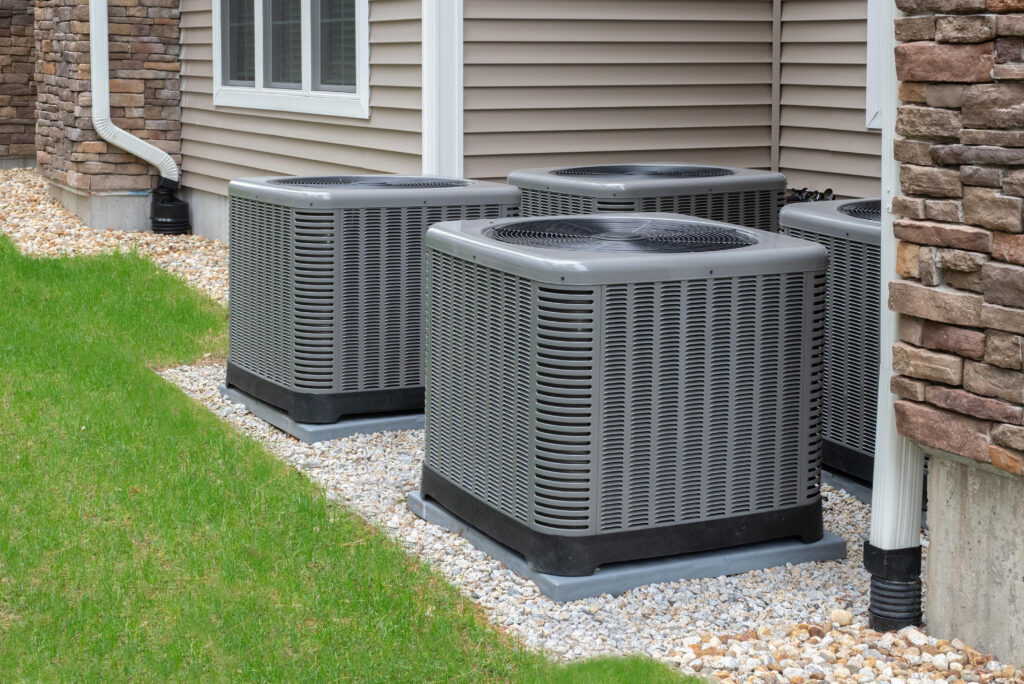
A fall tune-up is the cheapest thing you will buy all year. We clean the burners, test the ignition sequence, run a combustion analysis, check the heat exchanger, verify gas pressure and temperature rise, and look at the blower and filter. It catches the parts that are about to fail while there is still time to order them, rather than at 10pm on the first hard freeze
Ames has its own municipal utility, so the rebates here are different from the rest of Story County. Ames Electric Services runs the Smart Energy program with incentives on high-efficiency heat pumps, central AC and geothermal. Towns on Alliant Energy have a separate programme.
One local detail worth knowing before you sign: accepting an Ames Electric central air rebate normally means agreeing to a load-control switch on the outdoor unit, which lets the utility cycle it briefly during peak demand.
Also note that the federal 25C and 25D energy tax credits ended for equipment installed after 31 December 2025. Any contractor still advertising a 30% federal credit is working from old material. We confirm current rebate amounts with the utility before they go in your quote.
They put a variable-speed heat pump into a house well over forty years old with a finished basement, and figured out the duct routing without tearing the ceiling apart. Homeowner, north Ames
Have Questions?
The blower is working and the burners are not. The usual causes are a dirty flame sensor shutting the gas off seconds after ignition, a failed hot surface ignitor, a tripped pressure switch from a blocked intake or exhaust, or a gas supply problem. On high-efficiency units a clogged condensate drain will do it too. One thing to check yourself first: if the thermostat fan setting is on “ON” rather than “AUTO”, the blower runs continuously between heat cycles and the air coming out will feel cool. That one is free to fix.
Most common repairs land between $180 and $650 including parts and labour — an ignitor or flame sensor at the low end, an inducer motor, gas valve or control board toward the top. Blower motor replacement on a variable-speed system can run $800 to $1,400. We quote the price before doing the work, so you decide with the number in front of you.
At twenty years, replacement usually wins unless the repair is trivial. A useful test is to multiply the repair cost by the equipment age: if it clears roughly $5,000, put the money toward a new system instead. Two other automatic replacements: a cracked heat exchanger, which is a carbon monoxide risk and cannot be safely repaired, and any system where parts are no longer manufactured.
Modern cold-climate models do. Variable-speed inverter heat pumps maintain meaningful heating capacity down into negative temperatures, which is a genuine change from the equipment of fifteen years ago. That said, for most Ames homes we recommend dual fuel — a heat pump paired with a gas furnace that takes over below the switchover point. It is the cheapest way to run a house here across a full winter, and it removes the risk of an extreme cold snap entirely.
It depends on far more than square footage: insulation levels, window area and orientation, air sealing, ceiling height, basement conditioning and the local design temperature. That is what a Manual J load calculation measures. Bigger is not better — an oversized furnace short-cycles, heats unevenly, wears out its ignition components faster and is noticeably louder.
Once a year, ideally in September or October before the first cold snap. Most manufacturer warranties require documented annual maintenance to stay valid, and a combustion analysis is the only reliable way to catch a heat exchanger problem before it becomes a safety issue.
If you are inside Ames city limits you are served by Ames Electric Services, which runs its own Smart Energy rebate programme covering high-efficiency heat pumps, central air and geothermal. Surrounding towns are generally on Alliant Energy with a separate programme. Amounts change, so we verify the current figures with the utility and put them in your quote. Note that the federal 25C and 25D tax credits ended for installations after 31 December 2025.
Short-cycling. The most common cause is restricted airflow — a clogged filter, closed supply registers or undersized return duct — which makes the furnace overheat and trip its high-limit switch. It can also be a dirty flame sensor, a failing pressure switch, or a furnace that is simply oversized for the house. Start by replacing the filter and opening every register; if it persists, it needs a technician.
Don’t wait for your comfort to freeze over. Get a professional, NATE-certified Converse technician dispatched to your home or business today.